
Views: 0 Author: Site Editor Publish Time: 2026-04-08 Origin: Site


Is a "one size fits all" strategy costing you money? Selecting the right Injection Molding Machine is the most critical decision in furniture manufacturing. It directly impacts your production efficiency and long-term profitability. In this guide, you will learn the technical framework to size equipment correctly for high-quality chair production.
● Precision Tonnage Calculation: Determining the right Injection Molding Machine size requires multiplying the chair's projected area by a pressure factor of 2–8 tons per square inch, depending on the material.
● Crucial Safety Margin: Always include a 20% safety buffer in clamping force calculations to protect the machine's longevity and ensure consistent part quality.
● The 80% Capacity Rule: For optimal performance and to avoid material degradation, the total shot weight of the chair should not exceed 80% of the machine's maximum capacity.
● Physical Fit Requirements: Beyond pressure, the Injection Molding Machine must provide adequate platen size and tie-bar spacing to accommodate large-scale furniture molds and auxiliary equipment.
● Material Influence: High-viscosity or glass-filled plastics used in heavy-duty chairs demand greater injection pressure and more robust screw and barrel components.
● Avoiding Sizing Extremes: Undersizing leads to structural defects and flash, while oversizing results in wasted energy and higher operational costs without improving quality.
Calculating the required clamping force is the first step in sizing an Injection Molding Machine for chairs. Clamping force is the pressure required to keep the two mold halves closed against the internal pressure of the molten plastic during injection. Because chairs have large "projected areas"—the total surface area of the part as seen from the direction of the mold opening—they require substantial tonnage to prevent the mold from blowing open.
To find the right tonnage, use the "Tonnage-to-Square-Inch" formula. Most furniture-grade thermoplastics require 3 to 5 tons of clamping force for every square inch of the projected area. If you are manufacturing heavy-duty or industrial chairs using engineering-grade resins, this requirement may jump to 5 to 8 tons per square inch due to the higher injection pressures needed to move the material through complex geometries.
● The 20% Safety Margin: Never run your Injection Molding Machine at its absolute limit. Always add a 20% safety buffer to your calculated tonnage. This accounts for material variations and prevents excessive wear on the machine's tie bars and platens.
● Preventing Flash: Sufficient clamping force is vital for maintaining clean seat edges. If the force is too low, plastic will seep out of the mold cavity, creating "flash" that requires manual trimming and increases waste.
● Pressure Distribution: Chair molds often have complex ribs and varying wall thicknesses. These features require a machine capable of consistent pressure distribution to ensure the plastic fills every corner of the mold simultaneously.
Estimating shot capacity is equally important. This is the maximum weight of plastic the machine can inject in one cycle. You must calculate the total weight of the chair plus the material left in the "runners" and "sprues" (the channels that lead plastic into the chair cavity). For optimal performance, the chair's total shot weight should fall between 20% and 80% of the machine’s total capacity. If the shot is too small for the barrel, the plastic stays in the heat for too long and degrades; if it is too large, the machine may struggle to maintain consistent pressure.
While tonnage is the headline figure, machine tonnage and actual production capacity are not the same. A higher-tonnage machine does not automatically guarantee faster production. In fact, a smaller, high-speed Injection Molding Machine might outperform a larger one if it offers faster cycle times and lower energy costs for smaller furniture components like chair legs or armrests.
Physical constraints often dictate machine choice more than pressure does. The mold for a full-sized chair is physically large, meaning the Injection Molding Machine must have sufficient platen size and tie-bar spacing. Tie bars are the structural pillars of the machine; the mold must fit comfortably between them so it can be installed and removed without obstructing the machine’s frame.
● Platen Size: Ensure the machine's platens provide enough surface area to support the entire mold base, allowing for secure clamping and safety access.
● Opening Stroke and Daylight: Deep-draw molds, such as those for high-backed chairs, require a long "opening stroke". This is the distance the mold halves move apart. You must have enough "daylight" (total space between platens) to allow a robot arm or operator to remove the finished chair safely.
The type of plastic you use changes how the Injection Molding Machine performs. Common chair materials like Polypropylene (PP) have different flow characteristics compared to high-impact Polycarbonate or glass-filled resins. High-viscosity materials are "thicker" when melted and require significantly higher injection pressures and more robust screws and barrels to move the material into the mold.
Shrinkage is another factor. Large parts like chairs are prone to warping as they cool. The machine must be able to maintain "holding pressure" long enough for the plastic to solidify uniformly. For reinforced plastics, such as those used in stadium seating or office chair bases, we recommend using bimetallic barrels and specialized screws that can withstand the abrasive nature of glass fibers.
Your business goals should guide the sizing of your Injection Molding Machine. If you are focused on mass-producing monoblock garden chairs, you need a high-speed machine designed for 24/7 operation with fast cooling cycles. For custom designer chairs where production runs are shorter and designs change frequently, flexibility is more valuable than raw speed.
Consider "future-proofing" your investment. Buying a machine that is slightly larger than your current needs may allow you to run multi-cavity molds later—for example, molding four chair legs at once instead of two. Additionally, integrating quick-change systems can reduce downtime from hours to minutes, allowing you to switch between different chair styles without losing half a day of production.
The following table provides a general estimate of the Injection Molding Machine sizes typically required for different types of plastic furniture.
Chair Category | Typical Part Weight | Estimated Tonnage | Key Machine Feature |
Monoblock Garden Chair | 2.0 - 4.0 kg | 600 - 1200 Tons | Large platen size & high shot capacity |
Office Chair Base/Arms | 0.5 - 1.5 kg | 250 - 450 Tons | High precision & engineering plastic screw |
Children’s Stools | 0.4 - 0.8 kg | 150 - 300 Tons | Fast cycle times & energy efficiency |
Designer Shell Chair | 1.5 - 2.5 kg | 450 - 700 Tons | Long opening stroke for deep seats |
Undersizing is the most common mistake in the furniture industry. When an Injection Molding Machine lacks the necessary clamping force, the mold halves separate slightly during injection. This creates structural weaknesses and dimensional inconsistencies that make the chairs look "cheap" or, worse, unsafe for the end-user.
However, oversizing has hidden costs that can kill your margins. A machine that is too large uses more electricity to heat a larger barrel and requires more hydraulic power to move heavy platens. Furthermore, if the shot size is a tiny fraction of the barrel's capacity, the plastic can "cook" inside the machine, leading to discoloration or brittle parts.
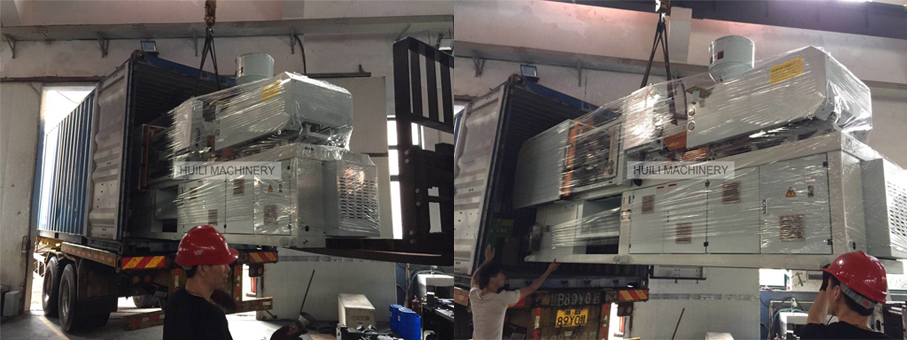
A 1000-ton Injection Molding Machine is a massive piece of industrial equipment. Before purchase, you must assess your facility’s infrastructure. These machines require high-voltage electrical service and significant floor space. You must ensure there is enough clearance around the machine for maintenance teams to access the motor, hydraulics, and control panels.
Water cooling is also critical. Large chair molds generate significant heat. You will need an integrated auxiliary cooling system (chiller) capable of removing heat quickly to keep cycle times low. Without proper cooling, the plastic will stay soft for too long, delaying the ejection of the part and slowing down your entire factory.
Sizing an Injection Molding Machine for chairs balances physics, material science, and financial strategy. Accurate calculations of projected area and shot weight prevent defects while saving energy. You must ensure platen dimensions and opening strokes fit your specific mold designs. Expert guidance from Zhangjiagang Huili Machinery Co., Ltd. ensures you select a high-performance Injection Molding Machine tailored for efficiency. Their advanced equipment provides the precision and durability needed for superior furniture manufacturing. Always verify your technical requirements with specialists to maximize your return on investment.
A: It depends on the chair’s projected area, material type, and shot volume requirements.
A: Multiply the chair's projected area by the injection pressure, typically 3–8 tons per square inch.
A: It ensures the Injection Molding Machine can fill the large chair volume plus runners efficiently.
A: Undersizing leads to flash, dimensional inconsistencies, and structural quality problems in the chair.


