
Views: 0 Author: Site Editor Publish Time: 2026-06-10 Origin: Site


Moving from outsourced packaging or semi-automatic setups to a fully automated facility marks a critical transition phase for manufacturers. It represents a vital leap in operational independence and production scale.
However, investing in an automated facility requires careful financial navigation. An automatic pet bottle blow molding machine is a capital-intensive asset. Slight inefficiencies in energy consumption or changeover times severely erode profit margins over time. Poor equipment choices create daily bottlenecks and hidden operational losses.
This guide provides a strictly objective, technical, and commercial framework. You will learn how to evaluate, shortlist, and integrate this machinery effectively. We aim to help you navigate complex vendor discussions without falling for exaggerated production claims. By following these principles, you can build a highly resilient internal production process.
**System Architecture:** Two-step linear and rotary systems dominate high-volume production, but selection depends strictly on required output (BPH - Bottles Per Hour) and footprint constraints.
**Hidden Opex Costs:** High-pressure compressed air and heating elements account for the majority of operational expenses; evaluating servo-driven systems is critical for true ROI.
**Integration Risks:** A plastic bottle machine cannot function in isolation; seamless synchronization with high-pressure air compressors, chillers, and downstream filling lines dictates actual operational success.
**Vendor Viability:** Credible manufacturers must offer transparent Factory Acceptance Testing (FAT) and standardized, locally sourceable pneumatic and electrical components.
Deciding to bring bottle manufacturing inside your own facility is a massive strategic shift. You move from simply filling containers to actually forming them. This changes your fundamental business economics.
Understanding your true return on investment means breaking down exact production expenses. Outsourcing bottles requires paying a premium for third-party labor, overhead, and markup. When you operate a dedicated bottle manufacturing line, you only pay for the raw preforms, electricity, and your internal labor.
You also eliminate massive logistics overhead. Shipping empty bottles means you primarily pay to transport air. Shipping dense, compact preforms drastically reduces freight costs. Your per-unit packaging cost plummets once the machinery reaches stable operational volume.
Relying on external suppliers creates constant vulnerability. Supplier delays immediately halt your filling lines. In-house blowing completely eliminates this dependency.
Reduced Storage Space: You store compact preforms instead of bulky blown bottles. This reclaims thousands of square feet in your warehouse.
Agile Production: You can switch bottle designs rapidly. This accelerates time-to-market for new beverage or packaging SKUs.
Inventory Control: You generate bottles exactly when you need them. This creates a highly efficient just-in-time production environment.
Manual and semi-automatic operations introduce human error. Operators might load preforms unevenly or expose them to contaminants. Automated systems utilize precision hoppers and automated descramblers. They feed preforms into precise heating zones without manual handling. This stringent thermal control reduces rejection rates significantly. You gain perfectly uniform wall distribution and consistent material clarity.
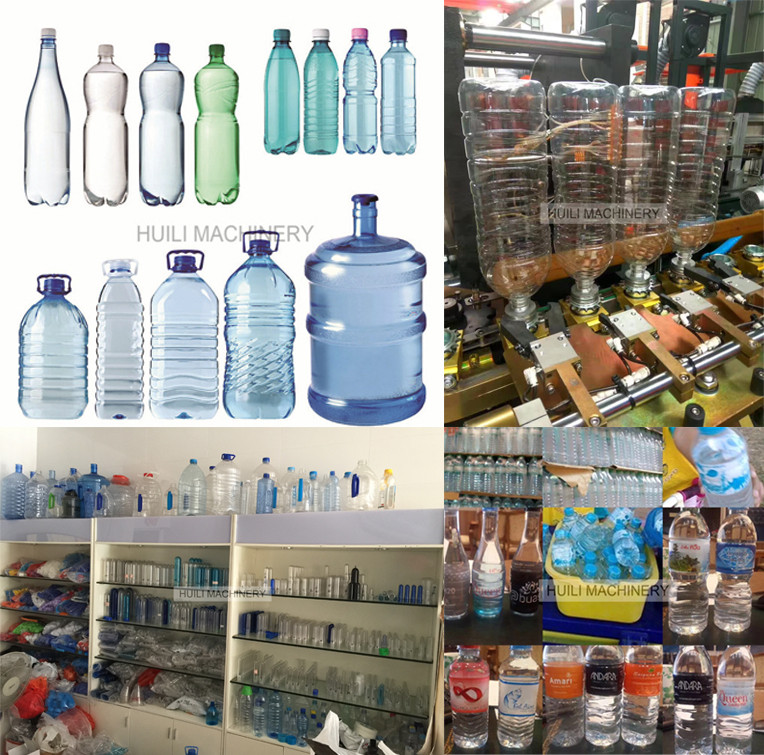
Selecting the right machinery architecture defines your daily output capabilities. You must understand the specific mechanical differences before requesting vendor quotes.
The industry uses two primary methods to transform raw plastic into finished containers.
The one-step process combines injection and blowing into a single machine. The machine melts raw resin, injects it into a preform shape, and immediately blows it into a bottle. This method fits specialized, low-volume production perfectly. You typically see it in the cosmetics and pharmaceutical industries.
The two-step process dominates the beverage sector. It uses reheat stretch blow molding with pre-made preforms. The machine heats cold preforms in an oven and then stretches them into bottles. It is the absolute industry standard for high-speed water and beverage automatic blowing equipment.
Two-step systems come in two distinct mechanical configurations. You must match the configuration to your specific volume demands.
Feature | Linear Machines | Rotary Machines |
|---|---|---|
Target Output | 2,000 to 10,000 BPH | 12,000+ BPH |
Motion Profile | Intermittent (stop-and-go) | Continuous circular motion |
Flexibility | High (easy mold swaps) | Low (optimized for single SKU) |
Capital Expenditure | Lower initial investment | Substantial initial investment |
Maintenance Needs | Standard mechanical upkeep | Strict, specialized protocols |
Linear machines excel in flexible environments. You can execute mold changeovers quickly. They require lower initial capital. Rotary machines handle massive, continuous mass production. They never stop moving. They fit single-SKU operations best but require serious technical maintenance.
Procurement teams often rely too heavily on marketing brochures. You must evaluate these systems on strict mechanical realities to ensure daily reliability.
Vendors frequently advertise a "maximum mechanical speed." This number represents the machine running empty in perfect conditions. You should only care about the "stable production speed." Heavy, complex molds slow the system down. Bottle volume also impacts the actual hourly yield directly.
A reliable plastic bottle machine designed for 500ml water bottles will drop in output if you switch to 2L bottles. The thicker preforms require more heating time. The larger volume requires more high-pressure air. Always demand output guarantees based on your specific bottle drawings.
Energy consumption dictates long-term profitability. Evaluate the infrared heating ovens carefully. Look for closed-loop temperature controls. These systems monitor external ambient temperatures and automatically adjust the oven lamps. This prevents overheating and saves massive amounts of electricity.
Modern equipment relies heavily on servo motors. Older systems use purely pneumatic cylinders for mold clamping and stretching. Pneumatic systems consume expensive compressed air constantly. Servo motors only consume power when they actually move. They reduce mechanical wear, provide precise positional control, and lower electricity bills substantially.
Production schedules change rapidly. You must assess the downtime required to swap mold cavities. Modern systems feature quick-release mechanisms. They allow operators to slide molds out without removing heavy water manifolds. Ask vendors exactly how many minutes a full neck ring and mold swap requires. Lengthy changeovers destroy daily productivity.
Proprietary parts create dangerous vendor lock-in. If a generic sensor fails, you should not have to wait two weeks for an overseas shipment. Ensure the manufacturer uses globally recognized brands for all critical components. Specify PLCs, pneumatic valves, and sensors from companies like Festo, SMC, Siemens, or Schneider. This guarantees local availability for spare parts.
A blow molding setup cannot operate in isolation. It acts as the heart of a complex mechanical ecosystem. Integrating ancillary equipment properly dictates your actual success.
Underestimating the high-pressure air requirement remains the most common integration failure. Blowing strong, clear containers requires immense pressure. You need specialized 30 to 40 bar high-pressure air compressors.
Standard factory compressors only provide 8 to 10 bar. You must size the high-pressure compressor perfectly. If it is too small, you will experience dangerous pressure drops. Pressure drops cause partially formed bottles and massive scrap rates. Always size the compressor 15% above the machine's maximum consumption rate. You also need heavy-duty air dryers and advanced filtration to keep oil out of the food-grade PET blow molding process.
Fast production generates extreme heat. The molds absorb this heat continuously. You need robust industrial chillers and cooling towers to maintain stable mold temperatures. If the molds run too hot, the plastic sticks. The bottles deform as they exit the machine. Proper chilled water circulation ensures the plastic solidifies instantly upon hitting the mold wall. This guarantees structural integrity at high speeds.
Even top-tier machinery fails if fed poor raw materials. Machinery operators often blame the machine when the preforms actually cause the defects. You must source structurally consistent preforms. If preforms sit in hot warehouses, they absorb moisture. They warp slightly. Improperly stored preforms jam the loading rails and cause uneven material distribution during blowing. Treat your preforms with strict environmental care.
Filtering through equipment manufacturers requires a methodical approach. You must look past the initial price tag and evaluate the vendor's engineering transparency.
Never accept shipment without a rigorous Factory Acceptance Test. You must insist on a multi-hour continuous run at the vendor's facility. Bring your specific preforms and your specific molds.
Dry-Run Testing: Observe the mechanical movements without material. Check for abnormal vibrations or servo faults.
Wet-Run Testing: Run continuous production for at least four hours. Measure the exact power consumption.
Scrap Verification: Count every rejected bottle. Compare the actual scrap rate against the contract guarantee.
Post-sale support defines machine uptime. Evaluate the vendor's digital capabilities. Can they log into the PLC remotely to troubleshoot software faults? Check their technician dispatch times. Ask for strict spare parts inventory guarantees. A machine sitting idle for three days while waiting for a proprietary drive belt destroys your weekly margin.
You face a major purchasing decision regarding integration. You can source the main machine, compressors, and chillers from individual specialists. This sometimes lowers the initial CapEx. However, it forces you to manage the complex integration yourself.
Alternatively, you can buy a turnkey system from a single integrator. The integrator assumes total responsibility for synchronization. If the compressor fails to keep up with the machine, the integrator must fix it. For most mid-sized manufacturers, the turnkey approach significantly reduces implementation risk.
Procuring automated bottle production equipment remains a fundamental infrastructure decision, not a simple off-the-shelf purchase. It requires evaluating facility constraints, ancillary equipment limits, and thermodynamic realities.
Decision-makers must prioritize stable output, verifiable energy efficiency, and robust post-sale support over raw, unverified speed claims. A slightly slower machine that runs continuously with zero faults beats a high-speed machine that jams every hour.
As your next step, prepare a comprehensive requirement sheet. Include exact bottle drawings, target BPH metrics, and facility floorplans. Present this detailed document before engaging vendors for technical proposals. This ensures you control the engineering conversation from day one.
A: A high-quality machine typically lasts 10 to 15 years under continuous operation. Reaching this lifespan requires strict preventative maintenance. You must clean ovens regularly, replace pneumatic seals promptly, and maintain optimal chiller water quality to prevent internal corrosion.
A: Yes, but strict limits exist. The machine's heating pitch and maximum mold stroke dictate these limits. You can easily switch between 330ml and 500ml bottles. However, a machine engineered for small water bottles cannot physically accommodate the preforms or molds required to blow 5L gallons.
A: The high-pressure air compressors and the preform heating ovens consume the vast majority of the electrical load. Upgrading to closed-loop infrared heating and servo-driven clamping systems dramatically reduces this load. Efficient mechanical design is crucial for managing daily utility bills.
A: Industry benchmarks dictate a scrap rate under 0.5% to 1% for stable, continuous runs. Achieving this low rate requires high-quality, dry preforms, stable chilled water temperatures, and consistent high-pressure air supply without pressure drops.


