
Views: 0 Author: Site Editor Publish Time: 2026-05-16 Origin: Site


Procuring capital equipment carries incredibly high stakes for modern manufacturers. Selecting the wrong PET bottle blow machine can lock your facility into excessive operational expenditures. You might face daily production bottlenecks and rigid lines. This severely restricts your ability to adapt to fast-paced market changes.
To survive in today's packaging, beverage, and chemical sectors, upgrading is essential. Transitioning to fully automatic blow machine systems is now a baseline requirement. Modern systems ensure competitive unit economics and steady, reliable output. Manual or outdated machines simply cannot match the speed and precision required by modern supply chains.
This guide provides an evidence-based evaluation framework. We will help production and procurement leads align machine capabilities with actual facility realities. You will learn how to avoid vendor lock-in and bypass common integration pitfalls. Let us explore the essentials of scaling your manufacturing effectively.
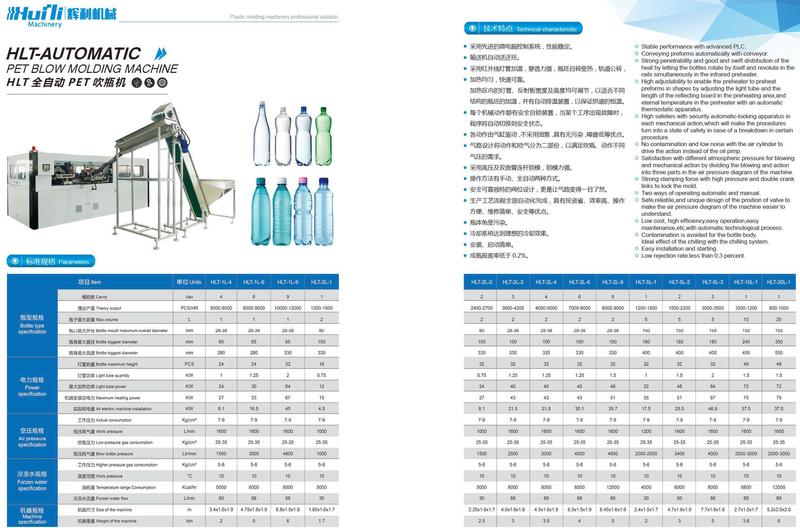
Transitioning to an automatic blow machine shifts the cost burden from labor to utilities; evaluating high-pressure air consumption and heat recovery is critical for ROI.
Machine architecture (Linear vs. Rotary) must be dictated by your specific SKU variation and required bottles-per-hour (BPH) output, not just upfront capital expenditure (CapEx).
Evaluating stretch blow equipment requires scrutinizing vendor claims around mold changeover times, servo-motor reliability, and proprietary parts dependencies.
Successful implementation relies heavily on facility readiness, specifically clean high-pressure air infrastructure and dedicated chilling systems.
Mismatching your machine type with your actual production volume creates massive inefficiencies. You might face idle capital if you buy too large. Conversely, you will suffer chronic undersupply if you buy too small. Smart PET bottle production requires matching machine architecture strictly to your volume and SKU variation.
Linear automatic blow machines offer specific, targeted advantages. They are ideal for low-to-medium output scenarios. Think 1,000 to 10,000 bottles per hour (BPH). If you have high SKU variance, linear models shine. They handle frequent mold changes easily. The pros include lower initial investment and simpler maintenance routines. Mechanics usually grasp linear architectures quickly. However, they carry higher per-unit energy costs. They also have a capped maximum throughput. They simply cannot push past certain physical speed limits.
Rotary stretch blow molding systems serve a completely different operational profile. Engineers design these for high-speed, continuous manufacturing. They excel in the 10,000 to 80,000+ BPH range. Bottled water and carbonated soft drink (CSD) plants rely on them heavily. At scale, they deliver unmatched speed and excellent energy efficiency. Yet, they require massive upfront investment. They also demand complex, specialized maintenance personnel to keep them running smoothly.
Feature Dimension | Linear Architecture | Rotary Architecture |
|---|---|---|
Ideal Output Range | 1,000 - 10,000 BPH | 10,000 - 80,000+ BPH |
SKU Flexibility | High (Fast mold changeovers) | Low (Dedicated, long runs) |
Maintenance Complexity | Moderate (Standard mechanical parts) | High (Specialized cams and rotary joints) |
Energy Efficiency | Lower at scale | Exceptionally high at scale |
Energy and high-pressure air consumption dictate your ongoing operational expenses. When evaluating stretch blow equipment, prioritize air recovery systems. Always mandate vendor data on secondary air recovery. Quality systems reuse high-pressure blowing air for pre-blowing or machine pneumatics. This significantly lowers compressor loads. It saves thousands in utility bills annually.
Oven heating efficiency is another major driver. Evaluate the infrared (IR) heating module designs carefully. Look for closed-loop temperature controls. Reflective ceramic profiling is also vital to minimize kilowatt waste. These features ensure preforms heat evenly. They bounce escaping heat back into the preform. This prevents wasted electricity and guarantees uniform material distribution.
Next, compare the primary drive systems. You will generally choose between servo-driven and pneumatic configurations. Fully servo-driven machines govern mold clamping, stretching, and preform transfer. They offer incredibly precise control. They also reduce physical wear and lower ambient noise. Precision matters when stretching lightweight preforms. Traditional pneumatic systems cost less upfront. However, they lack exact precision and consume costly compressed air constantly.
Mold flexibility and changeover speed determine your true scalability. Assess the realistic downtime needed to switch bottle volumes. Moving from a 500ml to a 1.5L mold should never derail your production shift. Prioritize machines featuring quick-release mold mechanisms. Standardized mounting plates also cut changeover times drastically.
Common Mistakes During Evaluation
Ignoring the ambient factory temperature when calculating oven heating loads.
Failing to test machine noise levels under full production speeds.
Overlooking the cost of replacement IR lamps during initial negotiations.
Successful rollout demands strict facility readiness. You cannot plug these machines into standard industrial outlets and expect miracles. Let us examine the critical infrastructure requirements for your facility.
First, consider your high-pressure air infrastructure. The implementation reality is incredibly stark here. An automatic machine is only as reliable as its air compressor. You must specify requirements for 30-40 bar oil-free PET compressors. Pair these directly with adequately sized air receivers and dryers. Moisture or oil in your air lines will ruin batches instantly. It also damages delicate internal pneumatic valves.
Second, calculate your chilling and water flow systems. Inadequate mold cooling poses a massive operational risk. It leads to deformed bottles. It also drastically reduces your maximum throughput. The PET material must cool rapidly to hold its shape. Calculate exact tonnage requirements for your industrial chillers. Base this on machine cavity count and standard cycle times.
Third, verify preform quality and feeding consistency. Many operators make a dangerous assumption here. They assume automatic systems tolerate poor-quality inputs. They absolutely do not. Systems will jam if fed out-of-spec preforms. Carefully evaluate the auto-loader elevator. Inspect the unscrambler systems thoroughly. They must feature gentle handling mechanisms. Robust anti-jamming sensors are also mandatory to prevent severe blockages.
Best Practices for Integration:
Audit existing compressor capacity before signing any equipment contracts.
Test chilling lines for consistent flow rates and acceptable pressure drops.
Stockpile premium preforms specifically for the testing and commissioning phase.
Deconstructing vendor proposals requires looking far beyond the sticker price. You must assess the estimated kilowatt-hour (kWh) required per 1,000 bottles. Review the proposed maintenance schedules carefully. You must also confirm localized spare part availability. Waiting weeks for parts shipped overseas kills profitability. Ensure the vendor stocks critical wear parts locally.
Apply a skeptical lens regarding proprietary versus open-market components. Avoid machines heavily reliant on proprietary Programmable Logic Controller (PLC) hardware. If the vendor goes out of business, your machine essentially becomes obsolete. You will struggle to find technicians to service it. Instead, favor systems utilizing globally supported automation brands. Siemens, Allen-Bradley, and Beckhoff are excellent standard options. Any local industrial electrician can troubleshoot them.
Finally, plan for the Factory Acceptance Test (FAT). This is your ultimate safety net. Never accept delivery without a rigorous FAT. Require the vendor to run your specific preforms. They must use your custom molds. Demand they hit the promised continuous BPH rate. They must sustain this for a minimum of 8 hours. Do not sign off until they prove consistent performance. Track scrap rates and power draw during this test.
Acquiring the right bottle making machine requires careful balancing. You must weigh speed requirements against utility costs. Facility readiness is equally critical to prevent integration disasters. Overlooking chilling or air requirements will cripple your new investment.
We advise buyers to finalize their exact bottle specifications first. Lock in your neck sizes. Define your target daily output accurately. Do all of this before initiating Requests for Quotation (RFQs). Clear specifications yield accurate quotes. Vague requests lead to mismatched equipment and painful change orders later.
Engage actively with technical sales engineers. Request highly detailed utility consumption sheets. Schedule capability demonstrations to see the PET blow molding machinery in action. Proactive evaluation ensures your next manufacturing upgrade drives true business growth.
A: Semi-automatic models require manual preform loading into the heating oven and molds. They demand dedicated labor and yield lower, less consistent output. An automatic system uses a hopper and elevator to feed preforms continuously. It removes human handling entirely. This drastically increases speed and ensures uniform bottle quality.
A: Air consumption varies by speed and bottle size. Calculate cubic meters per minute (m³/min) using bottle volume, required pressure (usually 30-40 bar), and BPH. A vendor must provide a precise formula. Larger bottles at higher speeds demand exponentially larger compressor capacities and robust air recovery systems.
A: Usually, standard machines only produce cold-fill bottles. Hot-fill juice bottles require special heat-set (crystallized) blowing processes. Heat-set machines feature specialized oven configurations and hot molds. This prevents the PET from shrinking during high-temperature filling. Always specify hot-fill requirements early, as standard models cannot be easily retrofitted.
A: A quality commercial machine typically operates efficiently for 10 to 15+ years. However, this lifespan strictly depends on rigorous preventative maintenance. You must adhere to routine lubrication schedules, timely seal replacements, and regular servo motor inspections. Clean, dry high-pressure air also significantly extends internal component life.


