
Views: 0 Author: Site Editor Publish Time: 2026-06-12 Origin: Site


Acquiring an automatic injection molding machine represents a critical capital expenditure for any plastics manufacturer. This single purchase heavily dictates your unit economics. It determines your overall factory capacity. It also guarantees your part consistency over millions of cycles. The industry continues shifting away from manual operations. Small prototyping systems simply cannot keep up. Transitioning to a fully automated setup enables true mass production.
You must evaluate your operational realities carefully. Small-scale setups often fail under rigorous continuous shifts. You need a vendor-neutral framework to make the right choice. Scaling up requires highly reliable equipment tailored to your specific facility. This article guides you through evaluating and selecting the ideal press. We cover machinery sizing, drive technologies, and facility integration. You will learn how to align equipment capabilities with your actual production goals.
Technology Match: Electric machines offer precision and energy savings, hydraulic machines provide raw clamping force, and hybrids offer a middle ground for fast cycle times.
Sizing the Press: Clamping force (tonnage) and shot size must strictly align with your largest, most complex mold requirements.
Hidden Costs: Total Cost of Ownership (TCO) extends far beyond the initial purchase price, with energy consumption and maintenance downtime being the primary long-term cost drivers.
Integration Readiness: Successful deployment requires upfront planning for facility infrastructure (power, cooling) and downstream automation (robotics, conveyors).
Manufacturing businesses rarely upgrade equipment on a whim. Clear operational bottlenecks typically trigger the procurement process. You might notice your current machines failing to maintain tight tolerances. High scrap rates destroy profit margins quickly. Unacceptable cycle times limit your ability to take on new customer orders. Furthermore, severe labor shortages make manual tending impossible. Many companies also upgrade when reshoring operations. Transitioning from outsourced manufacturing to in-house production requires highly reliable injection molding equipment.
We must clearly distinguish between desktop units and true industrial systems. Desktop machines serve excellent purposes in R&D labs. They work beautifully for rapid prototyping. They help engineers test mold concepts affordably. However, they lack the durability for continuous commercial operation. An industrial injection machine handles 24/7 mass production effortlessly. Engineers design these massive structures to withstand decades of high-pressure cycling. They feature advanced cooling interfaces and heavy-duty cast platens.
Defining success criteria upfront simplifies your purchase decision. How do you prove the return on investment for a new machine? Start by measuring Overall Equipment Effectiveness (OEE). OEE combines availability, performance, and quality into one powerful metric. Next, look closely at cycle time reduction. Shaving just two seconds off a cycle yields thousands of extra parts annually. Finally, track energy savings per kilogram of processed resin. Modern equipment processes material far more efficiently than older generations.
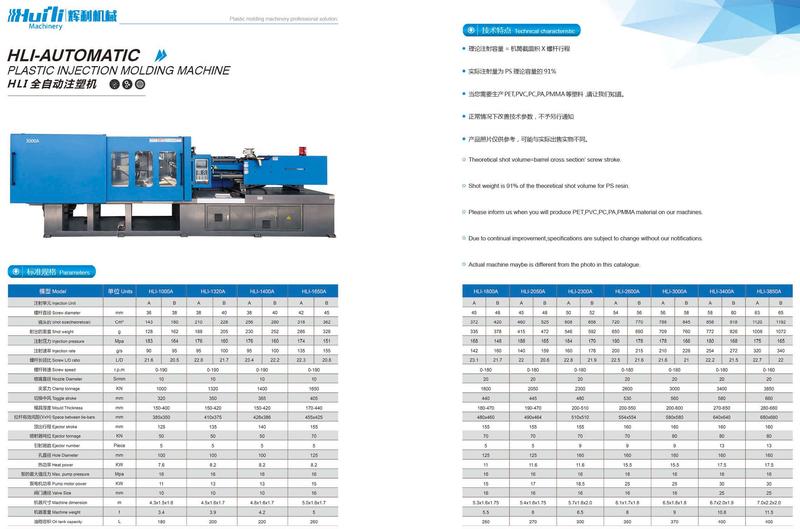
Engineers categorize modern presses by their primary drive mechanisms. You must choose the technology matching your specific manufacturing application.
Hydraulic Machines:
Hydraulic machines dominated the plastics industry for decades. They utilize hydraulic fluid to actuate the injection screw and clamping mechanism.
Pros: They offer significantly lower upfront costs. You get superior raw lifting and clamping force. They provide excellent reliability for thick-walled parts requiring long hold times.
Cons: Hydraulic pumps consume large amounts of energy. You always face the risk of oil leaks. This inherent messiness makes them unsuitable for strict medical cleanroom environments.
All-Electric Machines:
All-electric machines represent the modern standard for extreme precision. Electric servo motors control every mechanical movement directly.
Pros: They deliver exceptional repeatability and precision. You can expect up to 50 to 70 percent lower energy consumption. They offer whisper-quiet operation. Electric presses remain ideal for medical and cleanroom applications.
Cons: You face a much higher initial capital investment. They also offer lower maximum clamping force compared to massive hydraulic alternatives.
Hybrid Machines:
A hybrid system intelligently uses the best feature of each drive type. It bridges the gap between raw power and precision.
Overview: They combine electric screw drives for precise injection control. They utilize hydraulic cylinders to generate massive clamping force.
Best for: High-speed, thin-wall packaging applications. These complex parts require rapid injection speeds and incredibly high holding force simultaneously.
Technology Type | Primary Advantage | Energy Efficiency | Best Application Environment |
|---|---|---|---|
Hydraulic | Maximum clamping force | Low to Moderate | Heavy industrial, thick-walled parts |
All-Electric | Extreme precision | Very High | Medical cleanrooms, high-tolerance parts |
Hybrid | Speed and force balance | High | Thin-wall packaging, fast-cycle consumer goods |
Selecting the wrong technical specifications severely cripples your production line. You must deeply evaluate the operational limits of any plastic machinery before purchasing.
First, evaluate clamping force. Engineers often refer to this simply as tonnage. You calculate tonnage by determining the projected surface area of your part. You then multiply that area by the material's specific cavity pressure factor. Avoid severe under-sizing at all costs. Inadequate tonnage causes the mold to open slightly during injection. This creates undesirable flash on your parts. Conversely, over-sizing your press wastes massive amounts of energy. It can also crush and permanently damage delicate mold tooling.
Next, examine the injection unit specifications. Shot size remains a highly critical metric. You should aim to use 20 to 80 percent of the barrel capacity per shot. Using too little capacity causes the plastic to cook inside the heated barrel. This excessive residence time leads directly to material degradation. Using too much capacity prevents thorough melting. You must also verify the injection pressure capability. High-viscosity plastics require immense pressure to fill the mold cavities completely.
Physical dimensions dictate whether your tools actually fit inside the press. Check the tie-bar spacing carefully. The distance between these structural rods limits your maximum mold size. If you routinely run oversized, low-tonnage molds, look into tie-bar-less technologies. These innovative designs remove the physical structural barriers. They allow operators to mount massive molds on relatively small presses.
Finally, evaluate control systems and automation compatibility. Modern facilities rely entirely on connected data. Look for open-architecture controllers. Euromap standards ensure seamless integration across your factory. You want easy data flow into existing ERP systems. Good controllers also communicate effortlessly with peripheral equipment like chillers, robots, and resin dryers.
Purchasing a manufacturing press is only the first step. You must prepare your physical facility thoroughly for deployment.
Facility infrastructure requirements frequently surprise new equipment buyers. You cannot simply plug these machines into a standard wall panel. They require specialized high-voltage power drops. You must install robust chilled water loops for proper mold cooling. Inadequate cooling adds expensive seconds to your cycle time. Furthermore, verify your building's structural integrity. You need reinforced concrete flooring to support the immense weight. You also need overhead crane access to load heavy molds safely into the machine.
Integrating downstream automation makes the entire process truly automatic. Human operators cannot safely keep pace with modern cycle times. Consider adding 3-axis or 6-axis robots above the press. They execute fast, precise part extraction. Sprue pickers separate waste plastic automatically for immediate regrinding. Automated material handling systems convey raw resin directly to the hopper. These integrated tools eliminate human error. They also stabilize your cycle times completely.
Safety and compliance standards protect your workforce. You must prioritize mandatory safety considerations. Always adhere strictly to OSHA guidelines. Ensure ISO standard compliance across your facility. Inspect the physical guarding around the clamping unit. Emergency interlocks must function flawlessly at all times. If an operator opens the safety gate, all mechanical movement must cease instantly. A secure factory floor prevents injuries and shields you from legal liability.
Acquiring industrial equipment involves financial planning far beyond the sticker price. You must analyze the true long-term economic impact of your machinery choices.
Break down your capital expenditures versus operating expenses over a 10-year lifespan. Electricity bills and resin waste act as massive financial drains. They often exceed the initial machine purchase price very rapidly. Investing in a highly efficient electric press costs more upfront. However, the reduced monthly energy bills quickly offset that premium. Minimizing scrap through better machine precision also saves thousands in raw material costs annually.
You must weigh buying new versus refurbished equipment carefully. Buying new provides comprehensive warranties. You receive the latest controller technology and highest energy efficiency. Buying used or refurbished equipment offers lower upfront costs. It also provides much faster delivery lead times. However, you face significant reliability risks. Older machines frequently suffer from worn barrels or failing hydraulic seals. Weigh these operational trade-offs against your immediate production deadlines.
Use a structured vendor evaluation checklist to protect your investment. Keep these specific factors in mind:
Verify the local availability of spare parts and certified service technicians.
Confirm exact lead times for delivery, rigging, and installation.
Review the depth of training programs provided for your floor operators.
Establish clear Service Level Agreements (SLAs) for unplanned downtime.
Assess the manufacturer's financial stability to ensure long-term support.
Buying an automatic injection molding machine requires deep strategic alignment. You are matching exact production requirements with the appropriate machine technology. You must balance material behavior, mold size, and daily production volume perfectly. The right press improves part consistency and dramatically boosts factory output.
Begin by auditing your current mold portfolio immediately. Calculate your precise required tonnage and ideal shot sizes based on your largest tools. Evaluate your facility's power and cooling infrastructure to ensure compatibility. Finally, prepare a formalized Request for Quote (RFQ). Detail your exact technical needs clearly. Send this document to your carefully shortlisted manufacturers to begin productive negotiations.
A: You generally need 2 to 5 tons of clamping force per square inch of projected part area. The exact multiplier depends on the specific plastic resin. High-viscosity materials require a higher tonnage multiplier to prevent unwanted flash during injection.
A: A well-maintained industrial injection machine easily lasts 10 to 15 years. Some operate even longer with rigorous preventative maintenance. However, control interfaces and software technology may become obsolete sooner, often requiring controller retrofits to maintain peak efficiency.
A: Yes, it can. However, you must perform thorough purging procedures when switching materials. Processing specific resins like PVC or optical-grade polycarbonate often requires specialized screw and barrel designs to prevent chemical degradation.
A: Installation typically takes several weeks to a few months. The timeline depends heavily on your site preparation. Heavy rigging, precise leveling, water loop calibration, and essential operator training all add to the final commissioning schedule.


