
Views: 0 Author: Site Editor Publish Time: 2026-06-13 Origin: Site


In pharmaceutical manufacturing, container integrity is a strict compliance requirement rather than a simple production metric. Standard blow molding equipment often fails to meet the exact tolerances required for medical-grade vials and bottles. Transitioning to specialized equipment requires balancing high initial capital expenditure against long-term operational gains. You must carefully weigh scrap reduction, precise neck finishes, and cleanroom compatibility when upgrading your production lines. This guide outlines the technical criteria, compliance standards, and operational realities you must evaluate before procuring medical packaging machinery. We explore how different molding methods impact regulatory alignment and product safety. You will learn the hidden risks of tooling complexity and vendor integration. Finally, we provide actionable steps to match your machinery choices directly with your target output and quality goals.
Pharmaceutical container production requires injection blow molding (IBM) over extrusion blow molding (EBM) to guarantee zero-scrap neck precision and consistent wall thickness.
Equipment evaluation must prioritize cleanroom compatibility (ISO/GMP), precise weight control, and validation support (IQ/OQ/PQ protocols).
Tooling costs and mold changeover times are the highest hidden operational risks; assessing vendor capabilities in mold engineering is as critical as evaluating the machine itself.
Matching machine tonnage and cavity count to your actual output requirements prevents overcapitalization on small container equipment.
Medical packaging demands absolute uniformity. A single defect can cause contamination, leakage, or dangerous dosage errors. Extrusion methods typically leave pinch-off scars and flash. These flaws are entirely unacceptable in pharmaceutical applications. You cannot risk compromised seals on sensitive drug products. Furthermore, removing flash creates microscopic plastic dust. This dust easily contaminates sterile production environments, leading to failed compliance audits.
An injection blow machine solves these fundamental issues natively. It produces finished, scrap-free containers directly from the mold without secondary trimming. The initial injection phase forms a highly precise preform over a core pin. This process delivers perfectly calibrated neck finishes. These flawless necks are mandatory for child-resistant (CR) and tamper-evident (TE) closures. Such safety closures rely on exact thread dimensions to function correctly under rigorous regulatory testing.
What specific factors drive your return on investment?
Complete elimination of secondary trimming and manual deflashing operations.
Significantly lower raw material waste across millions of production cycles.
Minimized risk of expensive batch recalls caused by packaging seal failures.
Higher downstream line efficiency due to highly predictable container dimensions.
Performance Metric | Injection Blow Molding (IBM) | Extrusion Blow Molding (EBM) |
|---|---|---|
Neck Precision | Exceptionally high (injection molded directly) | Moderate (blown and trimmed mechanically) |
Scrap Generation | Zero scrap (flash-free production) | High (requires bottom and neck flash trimming) |
Wall Consistency | Highly uniform material distribution | Variable thickness near pinch-off points |
Cleanroom Suitability | Excellent (no trimming dust generated) | Poor (trimming naturally generates particulates) |
Evaluating an injection blow molding machine requires translating dry specifications into actual production outcomes. You must critically examine how technical features support daily cleanroom operations and validation protocols.
Cleanroom & Compliance Standards (GMP/FDA)
Feature: Look for fully enclosed operational zones, oil-free pneumatics, and specialized exhaust filtration.
Outcome: The system seamlessly meets ISO Class 7 or 8 cleanroom standards. Hydraulic oil leaks and exhaust particulates ruin cleanroom integrity rapidly. Using oil-free components prevents particulate contamination around open containers during the molding phase.
Resin Versatility & Temperature Control
Feature: Advanced systems utilize multi-zone PID temperature controllers and tailored screw designs.
Outcome: They easily handle pharmaceutical-grade PET, PP, and HDPE. Precise temperature management prevents thermal degradation inside the barrel. Degraded resin loses its structural barrier properties, which directly risks the shelf-life of the packaged drug.
Dimensional Precision & Weight Consistency
Feature: High-pressure hydraulic or servo-electric clamping mechanisms secure the molds tightly.
Outcome: You guarantee exact wall thickness and structural rigidity. Thin-walled containers rely heavily on this consistency. A high-quality pharmaceutical bottle machine ensures containers do not crush or jam on automated high-speed filling lines. Weight consistency also saves significant raw material costs over the machine's lifespan.
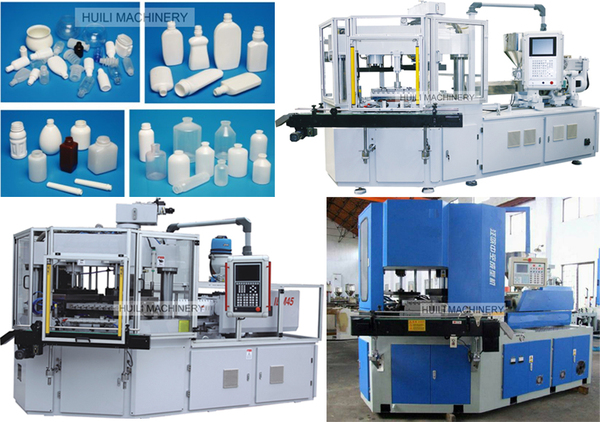
Many manufacturing facilities vastly underestimate the operational hurdles of installing new equipment. You must plan for specific bottlenecks to avoid costly downtime and delayed product launches.
Tooling complexity represents a major operational risk. Molds for this process require three distinct, highly synchronized components: the injection cavity, the core rods, and the blow cavity. Misaligned tooling design quickly leads to core rod deflection. This deflection occurs when high injection pressures bend the metal core slightly off-center. The result is uneven wall distribution, weak spots, and immediately rejected batches. Always review the Length-to-Diameter (L/D) ratio limits for your core rods with your engineering team.
Energy consumption also requires careful profiling. Traditional hydraulic machines draw massive amounts of power to maintain continuous clamping force. Evaluating hybrid or fully all-electric servo machines is crucial for modern facilities. They drastically mitigate long-term energy costs. Furthermore, all-electric machines run much cleaner, making them superior for GMP environments.
Operator training thresholds are notably steep. The learning curve for optimizing injection-to-blow cycle times demands experience. Balancing melt temperature, injection speed, and blow air pressure safely requires a skilled hand. Always factor in the hidden cost and time required for specialized technician training during the commissioning phase.
Finally, validation headaches often blindside project managers. Without proper Factory Acceptance Testing (FAT) and Site Acceptance Testing (SAT) documentation, progress stalls entirely. Qualifying the equipment for strict GMP production will delay your go-to-market timeline. Always require transparent, rigorously formatted validation steps before signing off on final equipment delivery.
Choosing the right small container equipment depends entirely on your specific production scale. Over-equipping leads to wasted capital, while under-equipping creates permanent supply chain bottlenecks.
Opt for low-tonnage, single-station, or compact machines if you serve early-stage clinical trials. Focus heavily on rapid mold changeovers and operational flexibility over maximum hourly output. These smaller machines allow fast iterations for trial batches. They help packaging engineers test new resin blends, weights, and closure mechanisms efficiently without tying up commercial production lines.
Evaluate reliable 3-station or 4-station machines for full-scale operations. The standard stations handle injection, blowing, and stripping sequentially. A fourth station offers optional conditioning, visual inspection, or labeling. Assess the long-term production viability based on actual cycle times multiplied by the mold cavity count. For example, running 8 to 16 cavities for 10ml to 100ml vials dictates your daily throughput. Accurately projecting these volume numbers prevents unexpected capacity constraints.
Ensure the equipment openly supports automated downstream integration. Your setup must handle automated leak testing and visual camera inspection systems seamlessly. Moreover, automated packaging conveyors should run directly off the stripping station. Hand-packing sterile vials introduces unacceptable contamination risks and slows down high-speed manufacturing lines.
A glossy specification sheet does not guarantee production success. You must assess vendors deeply on their engineering support, tooling expertise, and integration capabilities before making a purchase.
Consider mold-to-machine integration carefully. Does the vendor manufacture both the machine and the tooling in-house? Sourcing them separately drastically increases your integration risk. Pointing fingers between third-party mold makers and machine builders causes expensive project delays when defects occur. A unified vendor ensures the tooling perfectly matches the machine's specific clamping kinematics and thermal profiles.
Demand guaranteed response times for after-sales support. Assess their local inventory for critical wear parts. You need immediate access to replacement tie bars, core rods, and heater bands. A machine sitting idle waiting for overseas replacement parts destroys your production schedule and harms client relationships.
Validation documentation is absolutely non-negotiable in the medical sector. A credible vendor actively provides comprehensive document templates. They must supply Installation Qualification (IQ), Operational Qualification (OQ), and Performance Qualification (PQ) protocols. These documents must be tailored specifically for the pharmaceutical sector, referencing strict regulatory guidelines rather than generic manufacturing standards.
Investing in pharmaceutical molding equipment requires a multi-decade operational commitment. You must prioritize precise neck finishes, strict cleanroom compliance, and reliable tooling support over the lowest initial sticker price. Equipment reliability always outweighs upfront savings when patient safety and regulatory compliance are involved.
Next Steps:
Compile your exact container specifications, including resin type, target weight, neck finish, and desired cycle time limits.
Request a detailed tooling feasibility study from your shortlisted vendors before discussing standard machine pricing.
Evaluate the vendor's local support infrastructure, technician availability, and spare parts inventory.
Verify their ability to supply comprehensive IQ/OQ/PQ validation packages formatted for GMP auditors.
A: Injection blow molding injects the plastic onto a core pin before blowing, creating a scrap-free, highly precise neck finish required for pharma closures. Extrusion blow molding forms a tube that is pinched and blown, creating scrap (flash) and less precise necks.
A: Not inherently. Pharmaceutical-grade machines require specific modifications, such as enclosed housings, oil-free tie bar bushings, and specialized exhaust routing, to meet cleanroom particulate standards.
A: High-Density Polyethylene (HDPE) and Polypropylene (PP) are standard for solid dose pill bottles, while Polyethylene Terephthalate (PET) and Cyclic Olefin Polymers (COP) are often used for liquid suspensions and injectables due to their clarity and barrier properties.
A: Depending on the machine's design and operator experience, a full 3-station mold changeover (injection mold, blow mold, and core rods) can take anywhere from 4 to 8 hours. Standardizing mold bases can help reduce this downtime.


