
Views: 0 Author: Site Editor Publish Time: 2026-05-19 Origin: Site


Manufacturing small-volume containers from 2ml to 2L presents a unique production challenge. You must balance extreme dimensional precision with low per-unit costs and zero material waste. Highly regulated markets demand flawless execution from every production run. Even minor deviations in packaging dimensions can lead to catastrophic product failures or severe compliance breaches. Manufacturers need reliable, highly accurate equipment to meet these strict tolerances consistently.
We will explore how an injection blow machine serves as the undisputed industry standard for pharmaceutical, cosmetic, and specialty chemical packaging. This article provides an evidence-based evaluation of combined molding technologies, drive system selection, and ROI modeling for high-compliance environments. You will learn how to optimize your production floor for maximum efficiency, eliminate costly material waste, and select the exact specifications needed for your facility.
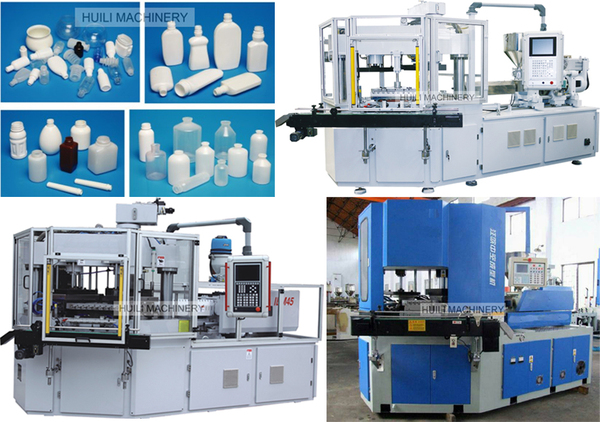
Scrap-Free Precision: Combined injection blow molding (IBM) fundamentally eliminates flash and secondary trimming, crucial for highly regulated pharmaceutical container applications.
Drive System Impact: Selecting between inverted-head hydraulic, hybrid, and full-electric systems dictates cleanroom compatibility and can yield up to 30% in energy savings.
Unit Economics: Optimal profitability relies on matching machine tonnage (typically 60T–250T) to specific cavity matrices (up to 36 cavities) for 2ml–200ml formats.
Compliance Readiness: Successful deployment requires verifiable PLC process controls for polymer shear stress and consistent molecular orientation to pass leak and child-resistant closure tests.
Choosing the right technology determines your baseline profitability. You must define success criteria early when comparing combined technologies against standard extrusion or injection stretch blow molding. A dedicated small container machine significantly outpaces alternative extrusion methods in the 2ml up to 2L size range. This optimal size window demands rapid cycle times and absolute consistency.
Consider high-stakes applications like pill bottles or roll-on deodorants. Roll-on deodorants require extremely tight fitment tolerances to ensure the rollerball functions correctly without leaking. Standard extrusion methods struggle to maintain this geometry. You also face rigorous demands when creating customized specialty chemical packaging. These items require structural integrity and flawless aesthetic finishes.
The core financial advantage lies in yield optimization and waste elimination. The combined process yields virtually zero scrap. You completely bypass the need for complex regrind management systems. You also eliminate secondary trimming equipment from your facility floor. Every gram of melted polymer transfers directly into the final sellable product. This efficiency protects your profit margins on high-value medical-grade resins.
Neck finish superiority sets this method apart. Producing a pharmaceutical container requires absolute precision. Injection-molded neck threads are non-negotiable for products needing child-resistant (CR) or tamper-evident seals. The injection phase guarantees a perfectly flat sealing surface. This prevents leaks and ensures aluminum foil induction seals bond flawlessly.
You must weigh these benefits against initial setup factors. Tooling development time takes slightly longer compared to basic extrusion molds. However, this mitigates long-term production risk. You receive a guarantee of uniform material distribution. You also benefit from hidden parting lines. The resulting pristine finish elevates the brand perception of your final product.
Understanding the internal mechanics helps you connect technical capabilities to production stability. The combined molding and injection blow molding process operates in three distinct stages. Each stage isolates a specific engineering task. This isolation ensures product quality remains uniform across thousands of cycles.
Stage 1: Preform Injection (Precision Control)
The cycle begins by injecting melted polymer into a highly precise preform mold. This cavity shapes the final neck finish and establishes the initial material volume. You must manage shear stress and temperature profiles carefully during this injection phase. Advanced controllers prevent material degradation. They ensure the polymer chains remain intact, preserving the mechanical strength of the resin.
Stage 2: Blow Molding (Structural Integrity)
The machine transfers the hot preform to the blow cavity via a rotating core rod. Compressed air enters the core rod to expand the polymer against the mold walls. This compressed air expansion drives controlled molecular orientation. The stretching aligns the polymer chains. This alignment ensures immense structural rigidity and uniform wall thickness. You achieve strong containers without relying on heavy gram weights, saving material costs.
Stage 3: Ejection & Downstream Integration
The final station strips the completed bottle off the core rod. You receive a "ready-to-pack" product. There are no tails to trim and no flash to cut. High-precision PLC controls minimize human intervention at this stage. These controls support automated inline testing protocols. You can seamlessly integrate automated torque testing and leak detection equipment directly at the ejection drop zone.
Selecting the right drive system impacts your facility infrastructure and long-term operating expenses. You must balance initial capital expenditure with your strict cleanroom compliance needs.
Inverted-head hydraulic systems offer proven reliability. They deliver high clamping force stability. This immense force prevents mold deflection during the high-pressure injection phase. Traditional hydraulic machines pose contamination risks in cleanrooms due to oil leaks. However, modern inverted-head designs place the entire hydraulic cylinder below the mold area. This physical separation prevents oil from contaminating the production zone. This adaptation effectively meets FDA and GMP cleanroom standards.
Hybrid systems offer a compelling middle ground. They combine servo-driven main motors with electric screw drives for the plasticizing phase. You gain substantial operational benefits. Hybrid models typically deliver greater than 30% energy savings compared to traditional hydraulic models. They also achieve up to 15% faster cycle times. You successfully balance capital expenditure while upgrading your energy efficiency.
Full-electric configurations represent the pinnacle of modern injection blow molding technology. Every machine movement utilizes highly accurate servo motors. They deliver ultimate precision. They generate the lowest operating noise on the production floor. Furthermore, they present zero risk of hydraulic fluid leaks. These outcomes make them best suited for ISO Class 7 or Class 8 medical cleanrooms. They do carry the highest initial CapEx, but they drastically lower ongoing utility costs.
Drive System | Primary Advantage | Energy Efficiency | Cleanroom Suitability |
|---|---|---|---|
Inverted-Head Hydraulic | Maximum clamp force stability | Standard baseline | Good (GMP/FDA compliant) |
Hybrid Configuration | Balanced speed and cost | Up to 30% savings | Very Good |
Full-Electric System | Zero oil contamination risk | Maximum efficiency | Excellent (ISO Class 7/8) |
You must map your expected production volumes against machine capabilities to avoid over-capitalization. A solid ROI relies on matching machine tonnage to the correct cavitation matrix. Manufacturers categorize a typical bottle machine by its injection clamping force, usually ranging from 60 to 250 tons.
Providing a practical sizing framework simplifies this decision. A 60-ton machine easily supports 14 cavities for a small 5ml container. However, if you switch production to a larger 100ml container, that same 60-ton machine might only support 6 cavities. Understanding this geometry limits bottlenecking. High-volume setups on larger 250-ton platforms can push the upper limits, accommodating up to 32 or 36 cavity tool sets for micro-vials.
60-Ton Machine: Best for frequent changeovers and specialized small-batch runs (2ml - 50ml).
100-Ton Machine: The versatile middle ground, handling 50ml to 150ml containers efficiently.
250-Ton Machine: Designed for continuous, high-volume pharmaceutical output exceeding millions of units monthly.
Mold amortization assumptions require transparent planning. Realistic tooling ranges span from $8,000 to $35,000. The exact price depends on neck complexity, cavity count, and hot runner requirements. Small volume industrial and commercial containers carry a higher per-unit amortization burden. You can offset high mold costs in small-batch manufacturing through quick-changeover capabilities. Parallel preparation of materials and pre-heating of molds allows operators to swap tooling in mere hours rather than full shifts.
Direct material costs heavily dictate operational margins. Because this combined process generates no scrap, you calculate material costs purely on the final bottle weight. You must also factor in machine energy consumption and compliance testing overhead when building your financial models. Scheduled maintenance intervals will require budgeting for specialized technicians and OEM replacement parts.
Deploying advanced molding technology requires strict adherence to quality assurance frameworks. Rollout lessons from top-tier facilities emphasize the need for rigorous protocol integration.
Material traceability and Quality Assurance (QA) serve as the foundation of compliant manufacturing. You must maintain perfect batch documentation linking specific resin lots to machine production timeframes. Regulators require strict dimensional testing. Quality teams must perform routine drop testing to verify structural integrity. Accelerated aging tests confirm the polymer will not degrade prematurely on pharmacy shelves. Verifiable documentation proves your output meets industry safety mandates.
Process parameter optimization demands a structured approach. You must execute a formal Design of Experiments (DOE) during the initial commissioning phase. The DOE tests various limits systematically. You identify the perfect window for barrel temperature, injection pressure, and extrusion speeds. Locking in these parameters prevents operators from making unauthorized adjustments that compromise bottle integrity.
Preventative maintenance scheduling ensures long-term profitability. You should shift your focus from volume-based intervals to time-based maintenance intervals. Time-based tracking prevents unexpected downtime. You must pay special attention to tie-bar alignment. Even a fraction of a millimeter of misalignment causes uneven mold wear and flash. Routine monitoring of screw wear guarantees consistent melt temperatures and protects your product yield.
Selecting the optimal equipment for small-volume production demands a strategic evaluation of your facility's specific needs. You must choose a machine based on strict cleanroom requirements, letting those constraints dictate your drive type selection. Your expected batch sizes and changeover frequencies will determine the necessary machine tonnage and cavitation layout. Finally, your specific neck-tolerance needs justify the investment in specialized injection mold tooling over cheaper extrusion alternatives.
Take these actionable next steps to refine your strategy:
Audit your current scrap rates and regrind costs associated with legacy blow molding equipment.
Define your minimum order quantities (MOQs) to establish your baseline flexibility requirements.
Request precise cavity-matrix proposals from OEMs based entirely on your target gram weights and neck diameters.
Evaluate your existing cleanroom classification to filter out incompatible hydraulic configurations immediately.
A: Single-stage (combined molding) performs injection and blowing sequentially on the exact same machine. It offers a compact footprint and produces zero-blemish small containers. Two-stage processes create preforms first, store them in bins, and blow them in a separate machine later. Two-stage is much more common in high-volume PET beverage production.
A: These machines readily process standard commercial resins including LDPE, LLDPE, HDPE, PP, and PS. Your specific material choice directly impacts the required clamp tonnage due to differing polymer flow rates and cooling shrinkage profiles.
A: Modern systems utilize quick-change designs and parallel pre-heating stations. These features can reduce downtime to just a few hours. This rapid turnaround is absolutely critical for facilities managing small commercial runs of 1,000 to 10,000 units.


