
Views: 0 Author: Site Editor Publish Time: 2026-05-15 Origin: Site


Sourcing industrial manufacturing equipment represents a massive capital expenditure. It directly impacts your production yields, unit costs, and overall product quality. You must get this decision right to maintain market competitiveness. Misaligning machine specifications with target product attributes creates severe operational headaches. You will quickly face high scrap rates and crippling bottlenecks in downstream filling lines. Inflated energy demands also drain your plant resources unnecessarily.
We designed this guide to solve these exact manufacturing challenges. It provides a systematic, engineering-focused evaluation framework. We will help you match complex production requirements with the correct machine architecture. You will learn how to verify tooling integration and evaluate advanced control systems. We also detail how to secure reliable vendor support and rigorous commissioning protocols. Ultimately, you can build a highly consistent, efficient process for plastic container production.
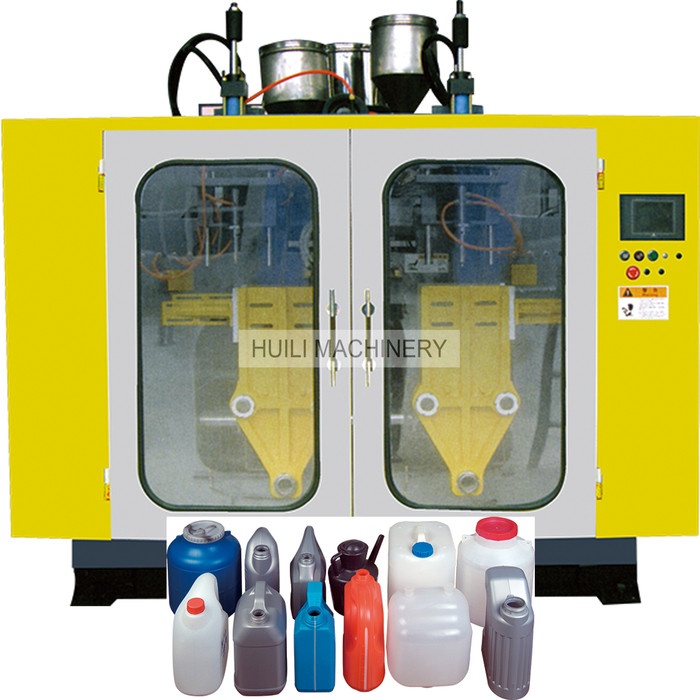
Start with the container: Container size, material (e.g., HDPE, PP), and barrier requirements dictate clamping force, die head type, and co-extrusion needs.
Production volume dictates configuration: High-volume runs require continuous extrusion with multi-cavity molds, while heavy or complex industrial containers necessitate accumulator head systems.
TCO outranks initial CAPEX: Energy consumption, automated parison control (material savings), and maintenance intervals are the true drivers of long-term profitability.
Tooling integration is critical: The machine must support advanced mold cooling parameters and precise clamp speeds to prevent common defects like rocker bottoms or uneven wall distribution.
Start by thoroughly evaluating the physical container itself. The final product dictates every major machine specification. You cannot select reliable equipment without a finalized container design.
First, measure the size and geometry of your intended product. The physical dimensions dictate your required clamping force. They also determine the necessary platen size. Larger, asymmetrical containers require significantly higher clamping tonnage. This extra force keeps molds tightly shut during the high-pressure blowing phase.
Next, consider material compatibility. You should standardize the machine configuration based on your primary processing resin. An HDPE blow molding setup serves as the absolute standard for chemical and dairy packaging. HDPE provides excellent melt strength. Conversely, high-clarity materials demand entirely different screw designs. Specialized designs manage shear heat and prevent dangerous material degradation.
Barrier properties also play a crucial role in equipment selection. Determine whether your product needs single-layer or multi-layer structures. Food preservation often demands specialized multi-layering. Chemical resistance usually requires advanced co-extrusion systems to prevent solvent permeation.
You must balance required output against physical cooling limits. Here is how you evaluate capacity requirements systematically:
Calculate the exact required hourly output to meet your targets.
Decide between single-cavity and multi-cavity mold configurations.
Evaluate the specific thermal conductivity of your chosen resin.
Determine the required cooling capacity needed to solidify the plastic rapidly.
Establish realistic cycle time limitations based on maximum cooling speed.
Machinery architecture completely defines your manufacturing capabilities. You must choose carefully between continuous extrusion and accumulator head systems.
Continuous extrusion runs without any interruption. It fits high-speed operations perfectly. You use this architecture for consumer packaging and fast-moving consumer goods. A reliable bottle blow machine typically utilizes a continuous setup.
Accumulator head systems serve an entirely different industrial purpose. They handle large, heavy industrial containers. Drums and automotive fuel tanks absolutely require this architecture. The machine stores melted plastic and extrudes it rapidly in one massive push. This rapid extrusion prevents the heavy parison from sagging before the mold clamps shut.
Controlling wall thickness remains critically important. You should only evaluate machines offering multi-point parison programming. Axial and radial controllers adjust material thickness dynamically during the extrusion phase. This precise, automated control prevents massive material waste. It ensures highly uniform wall thickness across complex or asymmetrical shapes.
Drive systems power the entire mechanical operation. You must compare hydraulic, hybrid, and fully electric servo-driven models. We prepared a comparison chart summarizing these three drive architectures below.
Chart 1: Drive System Architecture Comparison | |||
System Type | Energy Efficiency | Operational Environment | Best Application Use Case |
|---|---|---|---|
Fully Electric | Exceptionally High | Clean, quiet, zero oil leaks | Medical, food packaging, cosmetics |
Hydraulic | Moderate | Robust, requires oil maintenance | Heavy-duty industrial drums, thick parts |
Hybrid | High | Balanced, moderately clean | Mixed consumer and industrial goods |
Electric models provide extremely clean environments. We recommend them highly for medical or food applications. Hydraulic systems offer immense, robust clamping force. Hybrid setups blend the distinct advantages of both systems. Evaluating a comprehensive blow molding and extrusion blow machine ensures you match the drive mechanism to your exact application.
Your machinery must communicate flawlessly with your chosen tooling. Poor integration causes immediate quality defects and halts production entirely.
Cooling dominates the entire cycle time. The machine’s cooling interface must connect seamlessly to advanced mold designs. Many modern molds feature specialized copper-beryllium inserts. These inserts provide incredible, rapid heat dissipation.
Inadequate cooling creates massive manufacturing problems. Trapped heat and pressure cause the plastic base to bulge outward. Engineers call this specific defect a "rocker bottom." If your equipment cannot circulate chilled water efficiently, your final containers will continually fail basic quality control checks.
The closing mechanism needs incredible speed and precision. It must close quickly enough to capture the hanging parison correctly. It also requires precise force to create a strong, durable weld seam.
The pinch-off edges cut the hot plastic cleanly. If the clamp applies incorrect or uneven pressure, it damages the mold’s fragile cutting edges. A damaged edge results in weak seams and leaking containers. You must verify clamp precision during the initial trials.
Trapped air ruins product surfaces constantly. The clamp and blow sequences must support specific mold venting treatments. For example, polyethylene requires extensive micro-venting. Engineers often sandblast the mold cavities.
The sandblasted texture allows trapped air to escape easily during the high-pressure blowing phase. Without proper venting, you will see terrible "orange peel" defects on the bottle surface. Ensure your sequences align perfectly with your toolmaker's venting strategy.
You need to look closely at energy use and material management. Sustained efficiency defines a successful, competitive manufacturing operation over the long term.
Many operators focus entirely on heater band specifications. This is a common, misleading mistake. In steady-state operations, the heater bands do very little actual work. The vast majority of melting energy comes from mechanical shear friction.
The extruder screw crushes and melts the plastic through pure rotational friction. You must evaluate the extruder motor efficiency instead. Review the overall thermodynamic profile of the extrusion blow molding machine. High-efficiency servo motors reduce power draw significantly and stabilize melt temperatures.
Plastic waste harms your operational efficiency severely. You need fully integrated deflashing and regrind systems. These systems capture excess flash plastic automatically. They grind it down instantly for immediate reuse.
You can safely reintroduce up to 30% to 50% of this regrind material. Mixing regrind into virgin resin requires careful monitoring. It must not compromise the final container's structural integrity. Excellent regrind management drastically lowers total material consumption.
Manual handling creates severe production bottlenecks. You should definitely assess robotic part removal options. Automatic deflashing is also a hard prerequisite for modern plants.
Consistent, automated output feeds your downstream equipment properly. Filling and labeling lines require a steady, highly predictable supply of upright containers. If your handling automation falters, the entire production floor suffers cascading delays.
Buying the equipment represents only the very first step. You need strong, dedicated vendor support to get the system running safely.
Seek suppliers offering comprehensive on-site training. They must provide strictly documented standard operating procedures (SOPs). Startup protocols require meticulous, uncompromising attention.
For example, operators must verify cooling water circulation first. They must never activate heater bands without running chilled water. Skipping this simple step causes catastrophic equipment damage. Good vendors enforce these SOPs during commissioning.
Unplanned downtime destroys production schedules completely. A reliable vendor provides a clear diagnostic framework. They should give you an explicit troubleshooting matrix. This matrix helps your operators isolate mechanical or thermal issues quickly.
Table 2: Common Troubleshooting Matrix | ||
Defect / Symptom | Potential Root Cause | Immediate Corrective Action |
|---|---|---|
Parison Stringing | Excessive melt temperature or misaligned die | Lower zone temperatures; recalibrate die gap |
Rocker Bottoms | Inadequate cooling or high internal air pressure | Increase chill water flow; delay mold opening |
Die Lines (Scratches) | Contamination or degraded material in die head | Purge system completely; polish die head |
Uneven Wall Thickness | Parison programming failure or draft issues | Adjust multi-point axial profile settings |
For instance, operators must know why a parison strings. They need to isolate whether it stems from simple die misalignment or excessive melt temperatures. Clear documentation resolves these issues in minutes.
Safety and environmental standards remain absolutely non-negotiable. Verify that the machinery meets stringent CE requirements. Ensure it includes OSHA-compliant safety gating around all moving platens.
Environmental compliance matters more than ever today. Your machine must process modern, highly sustainable materials. Verify its capability to handle Post-Consumer Recycled (PCR) resins or dedicated mono-materials without constant jamming.
Selecting reliable processing equipment demands a highly disciplined, balanced approach. You must carefully weigh engineering specifications against material realities. Following a structured evaluation process guarantees a smoother, highly efficient production floor.
Finalize the exact physical dimensions and material layers of your largest required container.
Use this specific data to request standardized cycle-time guarantees from vendors.
Demand comprehensive tooling compatibility documents to ensure cooling interfaces match.
Prioritize machines offering advanced automated parison control.
Secure strict on-site commissioning and detailed troubleshooting documentation.
A: Extrusion forms a continuous, hollow tube of plastic (parison) that is then enclosed by a mold and blown out, making it ideal for asymmetrical and large hollow containers. Injection blow molding injects plastic onto a core pin before blowing, which is generally reserved for small, highly precise medical or cosmetic bottles.
A: High-Density Polyethylene (HDPE) possesses excellent melt strength, chemical resistance, and toughness, making it perfectly suited to hold the parison's shape during extrusion before the mold closes.
A: Uneven wall thickness is mitigated by selecting a machine with advanced, multi-point automated parison programming, combined with uniform mold cooling circuits and properly aligned die heads.
A: Cycle time is primarily dictated by the cooling phase. Key influences include the container's wall thickness, the thermal conductivity of the mold material, and the efficiency of the machine's chilled water circulation system.


