
Views: 0 Author: Site Editor Publish Time: 2026-06-08 Origin: Site


Upgrading or establishing a new bottle making line demands heavy capital expenditure. You must choose the right equipment to ensure long-term profitability. Selecting the correct machinery dictates your unit economics. It minimizes production bottlenecks and maximizes material flexibility. Extrusion blow molding (EBM) dominates the industry today. Manufacturers rely heavily on it. They use EBM for the continuous, high-volume production of hollow plastic containers. Processing specific resins like High-Density Polyethylene (HDPE) and Polypropylene (PP) requires precise handling. These materials possess unique melt-strength characteristics. They demand specialized mechanical configurations to form a stable parison. This article provides a comprehensive technical and commercial evaluation framework. We will help you confidently shortlist and procure the ideal equipment. You will learn how to match machine specifications to your chosen resin and scale your production effectively.
Material Specificity: HDPE and PP require distinct temperature controls and die head configurations to prevent wall-thinning and ensure structural integrity.
Configuration vs. Output: The choice between single and double-station machines, or single vs. multi-head (e.g., 4-head) setups, directly dictates your cycle time and scalability.
Total Cost of Ownership (TCO): Initial capital expenditure is secondary to energy consumption, scrap rates, and localized after-sales support when calculating long-term ROI.
Automation: Transitioning to a fully automatic plastic container equipment line drastically reduces labor variance but requires precise downstream integration (deflashing, leak testing).
Many manufacturers try using generic machinery for specialized resins. This business practice often leads to high defect rates. You will likely see inconsistent wall thickness across your product batches. Generic equipment also compromises bottle strength. Dedicated material configurations solve these costly production problems.
To process High-Density Polyethylene effectively, you need specialized hardware. You must integrate an HDPE machine equipped with a high-shear screw. These specific screws melt the resin properly. They prevent thermal degradation during the extrusion phase. Furthermore, HDPE possesses specific heat capacity and high shrinkage rates. It shrinks anywhere from 1.5% to 3% during cooling. You need robust, specialized mold cooling systems. Excellent water circulation prevents warping and maintains dimensional stability.
Polypropylene demands a completely different processing approach. PP containers require precise parison programming. Without strict temperature regulation, PP bottles lose their signature clarity. Poor thermal control also causes brittleness in the final product. You must configure barrel heaters carefully. PP requires a gradual melt profile to prevent material shear stress.
Buyers often face a structural trade-off. Do you purchase a multi-resin machine or a dedicated line? Dedicated equipment maximizes output for a single resin. It minimizes scrap and optimizes cycle times. However, a multi-resin machine gives you valuable market flexibility. You can switch between HDPE and PP based on client demand. You must weigh pure operational efficiency against long-term product adaptability.
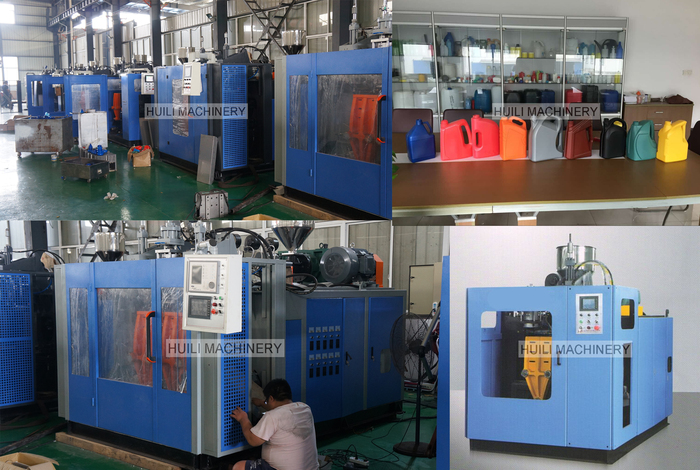
Modern equipment offers several architectural choices. You must align your machine configuration directly to your production targets. Understanding these categories prevents costly under-capacity or over-capitalization.
A single station system has a smaller physical footprint. It requires less initial capital to deploy. However, it severely limits your maximum production volume. It suits niche custom products or lower-volume runs.
Double-station models operate differently. They alternate molds rapidly under the continuous extruder. This design maximizes extruder uptime significantly. Your blow molding machine operates continuously. You effectively double your output potential without doubling your factory floor space.
Configuration Feature | Single Station System | Double Station System |
|---|---|---|
Factory Footprint | Compact, fits tight spaces | Larger, requires wide clearance |
Capital Expenditure | Lower initial cost | Higher initial cost |
Production Volume | Moderate (Standard output) | High (Nearly double output) |
Extruder Utilization | Intermittent mold catching | Continuous alternating catch |
Output scalability depends heavily on your die head setup. A single head works well for larger items. It handles complex geometries easily. Conversely, high-volume production requires multi-head configurations. Multi-head setups split the melt flow. They drop several parisons simultaneously.
For example, you might use a double-station, 4-head setup. This specific configuration produces eight bottles per cycle. Manufacturers standardly use this setup for small-capacity items. It excels at producing 1L detergent bottles rapidly. You must balance the flow channels precisely. If unbalanced, the parisons will drop at different speeds.
Continuous extrusion drops a molten parison constantly. The mold simply moves in to catch it. This process represents the global standard for small to medium bottles. It handles HDPE and PP packaging efficiently.
Accumulator heads operate on a different mechanical principle. They store molten plastic in a heated cylinder. A hydraulic ram then pushes it out rapidly. You strictly need accumulator heads for industrial drums and large jerry cans. The heavy parison would sag under its own weight if extruded slowly. Therefore, heavy-duty plastic container equipment relies exclusively on accumulator technology.
Smart buyers look far beyond basic spec sheets. You must evaluate how equipment features translate into daily operational outcomes. Performance metrics determine your actual profitability.
Material distribution remains critical. Multi-point parison wall thickness control changes everything. Top-tier machines use 100-point Moog programmers. You can pinpoint plastic distribution exactly where needed. This technology lets you lightweight containers successfully. You save massive amounts of resin over a year. Importantly, you achieve this without sacrificing structural top-load strength.
Drive systems impact your bottom line every single day. Hydraulic systems cost less upfront but consume more continuous power. All-electric drive systems require higher initial capital. However, they slash power usage significantly. They also offer exact, repeatable precision. Hybrid systems bridge this gap. They combine electric mold movement with hydraulic clamping power.
Fully automatic machines reduce secondary processing. In-line auto-deflashing removes excess plastic instantly. You cut labor variances significantly. Operators no longer trim bottles manually. However, auto-deflashing requires rigorous mold precision. If your molds misalign slightly, the machine will tear the bottles. The flash must pinch off cleanly every time.
You must calculate required clamping tonnage accurately. Undersized clamps allow molds to blow open. Oversized clamps waste energy and money. Follow this simple framework to determine your needs:
Determine the container's total projected area.
Identify the specific resin's required blow pressure.
Multiply the area by the pressure to find basic force.
Add a 20% to 30% safety margin for reliable flash pinching.
Deploying a new extrusion blow molding machine involves significant friction points. You must plan carefully to avoid launch delays.
You cannot ignore non-negotiable facility prerequisites. Your plant needs adequate chilled water capacity. Molds require water supplied at 10°C to 12°C. You must also guarantee highly stable compressed air pressure. Blower systems need 8 to 10 bar consistently. Finally, ensure your electrical grid handles massive power draws. Barrel heaters consume immense energy during initial morning startups.
Custom mold tooling involves exceptionally long lead times. You will face a reality of trial-and-error during the initial testing phase. Molds rarely work perfectly on the first try. You must schedule buffer time for tooling adjustments. Expect to modify pinch-off areas or adjust cooling channels. Plan these delays into your project timeline.
Be honest about the operator learning curve. Running this machinery takes specific skill. You need intuitive PLC and HMI interfaces. Demand comprehensive, on-site vendor training. Operators must know how to troubleshoot parison drop lengths independently. They must understand how to adjust cooling cycles based on ambient factory temperatures.
You need clear, objective logic when conducting vendor due diligence. The right partner ensures decades of reliable production. The wrong partner guarantees continuous headaches.
Insist on internationally recognized, non-proprietary components. Specify common, trusted brands for valves, PLCs, and sensors. Siemens, Allen-Bradley, and Beckhoff represent safe choices. This strategy prevents strict vendor lock-in. It also protects you from excessive downtime. When a minor sensor fails, you can buy a replacement locally. You avoid waiting weeks for an overseas shipment.
Define rigorous testing protocols before signing any contracts. You must run a Factory Acceptance Test (FAT) and a Site Acceptance Test (SAT). Both tests must use your actual production resin. A robust testing protocol includes:
Inspect all dry cycle mechanical movements.
Verify extruder melt temperature stability.
Run continuous, uninterrupted production for four hours.
Measure bottle weight consistency across multiple cycles.
Test auto-deflashing reliability and scrap ejection.
Do not accept generic maximum output claims. Request specific cycle-time guarantees based on your exact bottle weight and design. Ask for tailored energy consumption estimates. Reliable equipment vendors will gladly provide this granular data. They will model the production math specifically for your facility.
The ideal machine aligns material specifications, automation needs, and target output perfectly. Balancing HDPE or PP nuances ensures a cohesive, highly measurable return on investment. You must evaluate die heads, drive systems, and parison controllers carefully.
Finalize your container design and target weight first. Do this before requesting any equipment quotes. This sequential approach guarantees accurate machine sizing. It prevents costly specification errors and ensures you buy enough clamping tonnage.
Consult with an experienced application engineer today. Review detailed machine specifications carefully against your product requirements. Request a custom production analysis to match equipment perfectly to your factory floor. Taking action now secures your future production capacity.
A: Cycle times depend heavily on bottle volume and mold cooling efficiency. A standard 500ml HDPE bottle typically runs between 12 to 16 seconds per cycle. A larger 1L bottle often requires 16 to 22 seconds. Using advanced chilled water systems and optimized mold materials reduces these cycle times.
A: Yes, one machine can run both materials. However, it requires significant mechanical adjustments. You must change barrel temperature profiles and often swap the extruder screw. Purging the old resin completely takes time. This changeover process directly impacts your machine uptime and overall production scheduling.
A: A double station machine draws more total power. However, it provides massive efficiency gains per unit produced. Because the extruder runs continuously without pausing, you waste less thermal energy. The energy cost per individual bottle drops significantly compared to a single station setup.
A: A standard machine extrudes a continuous molten tube directly into the mold. It suits smaller containers perfectly. An accumulator machine stores molten plastic in a cylinder. It then shoots the plastic out rapidly using a hydraulic ram. This prevents heavy parisons from sagging when making large industrial drums.


